
Selling the California Dream
What did these posters promise, who were they promising it to, and what was outside the frame?
Historical California travel posters went beyond just marketing destinations. They actually contributed to creating a cherry-picked image of the state as beautiful, open, exciting, and made for leisure. Collections such as those created by LAPL and the Library of Congress have preserved many of these posters, but none of them gathers all the California-related posters and questions what is being left out of their view.
My archive connects each of the posters with a source which challenges the image of the place being advertised in the poster. For example, the poster about Yosemite is accompanied by material on the Ahwahneechee, and the poster about Catalina by stories of the Tongva people and work of the Mexican Americans who managed the tourist economy of the island. The poster about Indian Court is supplemented with the list of the names of Pomo weavers not mentioned, and the Golden Gate Exposition poster is completed with information about Treasure Island after the exposition
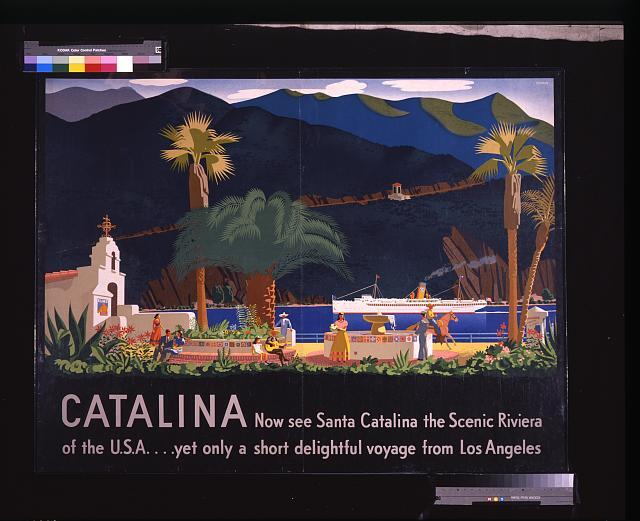
The reason behind this project is that there are two kinds of audiences I have in mind. For residents of California and tourists visiting, this archive helps show that the images that have shaped their perception of this state have never been random or accidental. There were explicit decisions made about which parts of the story should be told and which not, and one often perceives a place through its advertising long before actually seeing it.
This methodology derives from what I have learned and read throughout my digital humanities and archival design class (shoutout Prof. Tanks!). Michelle Caswell states that records cannot be considered passive by-products of the process of archival design, but rather are active participants. Therefore, a poster is not just an artistic visualization of the state, but an object which helps to create the California dream. The Peel Archives project about appraisal helped me to understand the selective nature of the archival record and why entire groups get excluded from it. The chapter by Anne Gilliland in Introduction to Metadata gave me a concrete way to act on that. For example, even a place's name is a metadata decision, which is why a poster's destination here reads Pimu rather than only Catalina.
Next time you encounter a travel poster or a tourism campaign, ask yourself: who is behind it, who does it target, and what would you learn by looking beyond the frame
Using this Exhibit
Welcome! This exhibit explores how historical California travel posters shaped the idea of the "California dream." Each poster is paired with another contextual source, such as a photograph, oral history, video, or historical object, which offers a different perspective on the same place.
To explore these connections, look for the Paired Item field in each item's record. The linked item will take you to the companion source.
Inside & Outside the Frame presents the four pairings. Mapping the Dream places every poster and paired item on an interactive map. Browse the Archive contains all eleven items with their full records, while the Data Dictionary, Reading List, and Project Statement explain how the archive was created.
To move through the exhibit in the order I designed it, click the button at the bottom of each page. You can also visit any section directly using the menu at the top of the site. Item titles are clickable throughout the exhibit and will take you to the full record, where you can explore the metadata and paired sources in more detail.