
Inside & Outside the Frame
Each poster below appears with the source or sources paired with it. Use them together rather than separately, taking a look at the poster first, then what is outside the frame. Click any image to learn more about it.
Yosemite
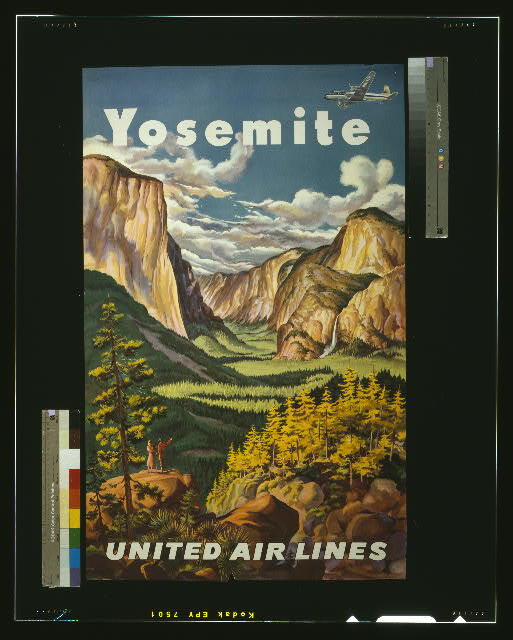
This poster sells Yosemite as very breathtaking and easy to get to. The United Air Lines branding suggests that visitors can experience the beauty of the national park, without the difficulty of getting there.
Yosemite: The First People tells a different side to this story. Through the voices of Ahwahnechee descendants, including Marshall Jack, Julia Parker, and Jay Johnson, it discusses how Yosemite was home to Indigenous communities long before it became a national park. The Mariposa Battalion's removal of the Ahwahnechee in 1851 allowed for the notion of untouched wilderness this poster is selling.
Indian Court
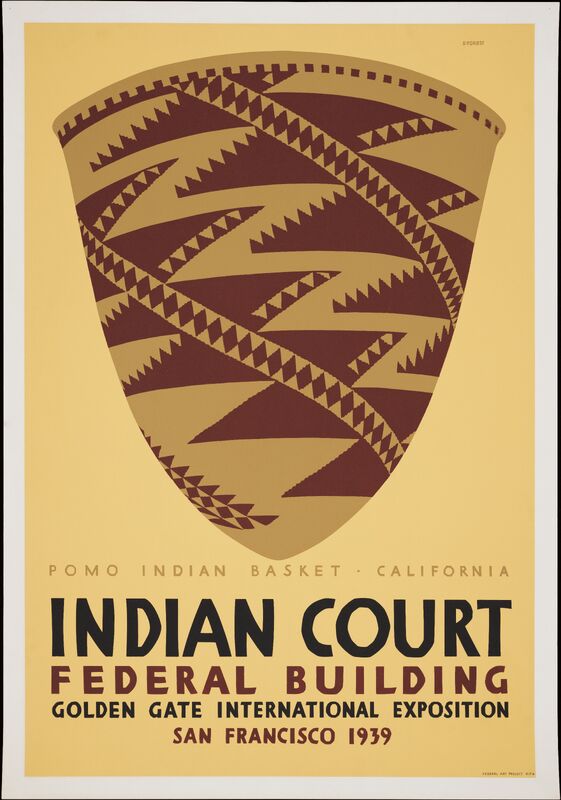
This poster treats Indigenous culture as an artistic attraction for fairgoers to look during the Golden Gate International Exposition. The basket design is looked at as a decorative pattern, purely commercializing Native artistry without introducing anyone to those who made it.
Annie Burke and her daughter Elsie Allen were Pomo weavers working in the same years that this poster was created. While the poster reduces basketry to just design, their story restores the names and histories behind their work. Annie Burke's preserved baskets became the foundation of the Elsie Allen Basket Collection, and Allen later published Pomo Basketry: A Supreme Art for the Weaver.
Catalina Island
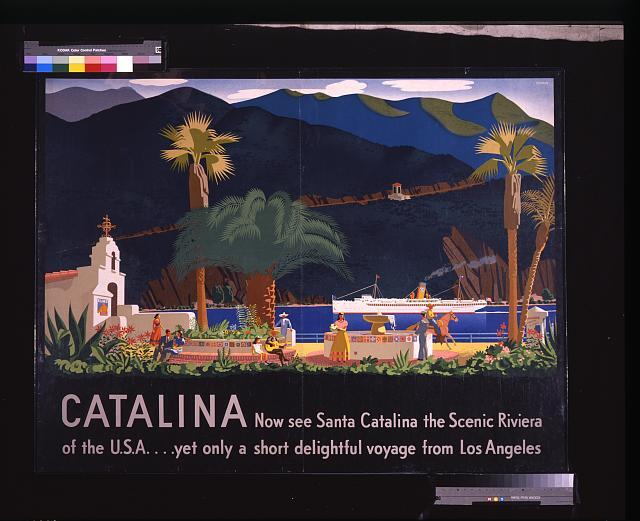
This poster depicts Catalina Island almost like an overseas Mediterranean vacation destination. The palm trees, mission-style bell tower, tiled architecture, and the steamship create the aesthetic that Catalina is exotic and easily reachable at once. The few people shown are visitors and tourists enjoying the plaza, rather than residents or workers.
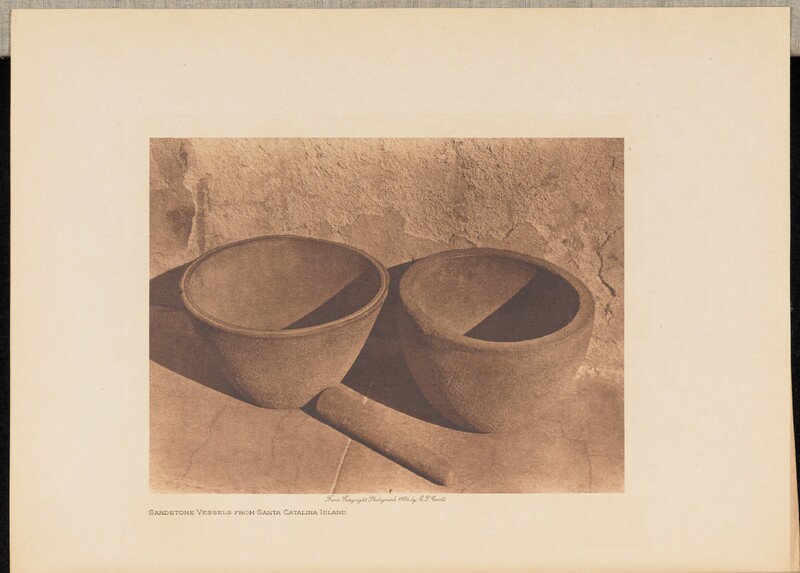
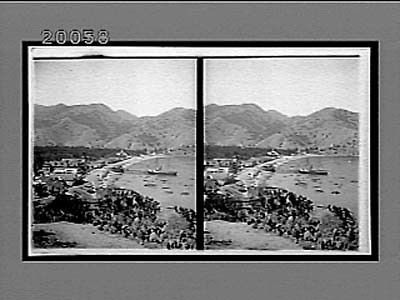
The following three paired sources points to a much longer history of the island than the poster suggests. A 1924 photograph of Tongva sandstone bowls and a pestle shows how Indigenous communities lived on Catalina long before it became a tourist destination. An early photograph of Avalon Harbor shows the island before its redevelopment, when it looked far different from the polished image promoted in travel posters. Lastly, the Brown Berets activists occupied Catalina in 1972, demanding affordable housing. At the time, many Mexican American workers who supported the tourism industry lived in segregated neighborhoods and were banned from the Casino and even public benches. Together, these sources show that Catalina's history is far deeper than the surface-level paradise aesthetic.
Golden Gate International Exposition
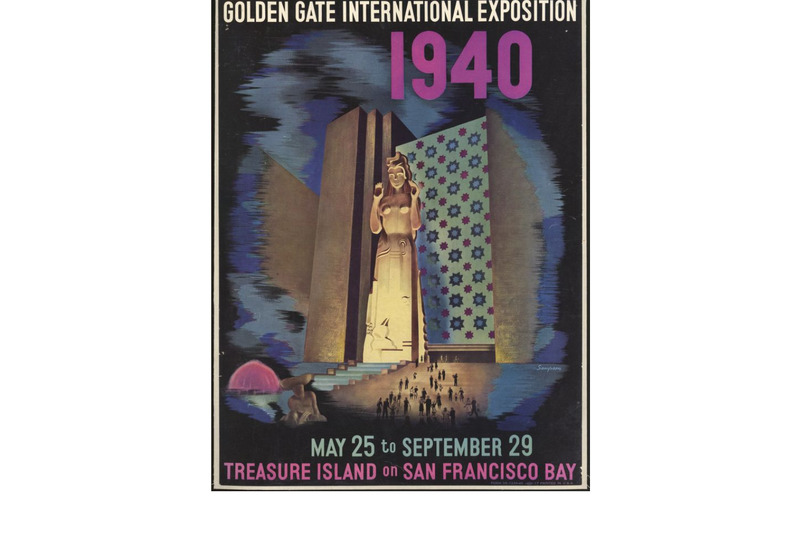
This poster depicts the Exposition as futuristic, innovative, and optimistic. Visitors are part of an anonymous and uniform crowd approaching a statue of Pacifica, who is a symbol of progress and unity. Unlike the other three posters, this image does not feature a natural landscape. Instead, it presents a carefully constructed world built on an artificial island.
Treasure Island was meant to become an airport for San Francisco after the fair. Instead, the Navy took it over in 1941 and started usin it as a wartime processing center. The site was later used for radiological training, and contamination from this is still being remediated today. In addition, the statue of Pacifica was dismantled weeks after Pearl Harbor.